Illustrative comic — follow current official advice10 practical beats · read top to bottom
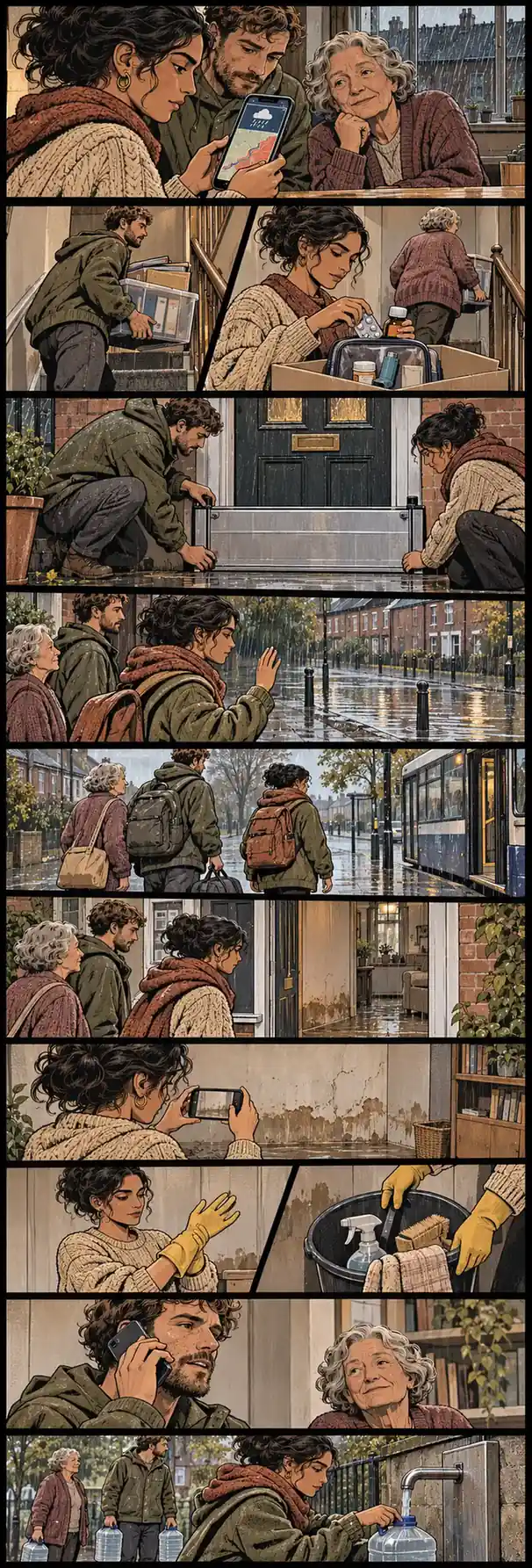
- Read the official warning for your area.
- Put people, pets, medicines and key documents first.
- Move what matters to higher ground if there is time and it is safe.
- Use fitted barriers or covers only as intended.
- Never walk, cycle or drive through floodwater.
- Turn supplies off only if official advice says so and it is safe.
- Leave when the emergency services tell you to leave.
- Return only when authorities say it is safe.
- Photograph damage before cleaning and contact the insurer or landlord.
- Use protective clothing and follow official clean-up advice.
Plain-text companion / accessibility + search
The same story, without the gutters.
This summary supports the comic; it does not replace the demonstration above. The right response always depends on the live situation and current official advice.
- Read the official warning for your area.
Keep the move small, visible and easy for the household to repeat. - Put people, pets, medicines and key documents first.
If the situation changes, stop and check the official service linked below. - Move what matters to higher ground if there is time and it is safe.
Keep the move small, visible and easy for the household to repeat. - Use fitted barriers or covers only as intended.
If the situation changes, stop and check the official service linked below. - Never walk, cycle or drive through floodwater.
Keep the move small, visible and easy for the household to repeat. - Turn supplies off only if official advice says so and it is safe.
If the situation changes, stop and check the official service linked below. - Leave when the emergency services tell you to leave.
Keep the move small, visible and easy for the household to repeat. - Return only when authorities say it is safe.
If the situation changes, stop and check the official service linked below. - Photograph damage before cleaning and contact the insurer or landlord.
Keep the move small, visible and easy for the household to repeat. - Use protective clothing and follow official clean-up advice.
If the situation changes, stop and check the official service linked below.
Do not turn a household checklist into a rigid protocol. People, buildings and local instructions differ; follow emergency services and qualified professionals where relevant.
Sources / no borrowed logos
GOV.UK: what to do before or during a flood (opened and checked 16 November 2026).
We name and link sources. We have not staged this as a field test. No invented timings, statistics or urgency.